No discussion of invasive perennial weeds would be complete without a few words about the 'lowly' dandelion. It's what most folks think of when someone says "weeds" and is no doubt the most widely spread/recognized/hated invasive plant in the U.S. I'd also guess that more money and time are spent trying to control dandelions than any other weed species, noxious or otherwise. Dandelions belong in this part of the overall discussion because, contrary to conventional wisdom, it is a perennial plant. Once established, mature dandelion plants have large tap roots that survive winters as well as most human efforts to control the pesky plants. Almost all dandelion control is done for aesthetic reasons in lawns and turf, since the plants do provide forage for livestock and browsing/grazing wildlife. Since nearly all parts of the dandelion plant are useful as food or medicines, it was probably brought to North America by the earliest European settlers.
Dandelion Control
Non-Chemical: 1-Mow often to keep the flowers from producing seed and hope your neighbors do it too. 2-dig or pull the plants with one of the many inventions specifically designed for this (you must get nearly all of the root)
3-heavy mulching followed by replanting of the non-target vegetation that is also killed
4-boiling water, agricultural vinegar and flaming torches will kill the tops of the plants making them effective only on young dandelions. Older plants will sprout back from the roots. These methods also kill other plants that are sprayed or burned.
Chemical: 2,4-D was invented for Dandelions. All the various commercially available "lawn herbicides" contain 2,4-D and many also contain small amounts of more serious herbicides such as dicamba or triclopyr to broaden their spectrum of species controlled. Look for "Foundation" or "Triplet" or "Trimec" but be careful not to over-apply these.
New: 1-'Serritor' fungus that kills broad leaf plants only and then "disappears". This may not be available in the US yet.
2-'Fiesta' or 'Iron-X' use chelated iron to give "dandelion, clover and plantain" a lethal dose of iron. This is available at the Sandpoint Co-op as Whitney Farms "Lawn Weed Killer", AND IT SEEMS TO WORK, but only for dandelions. I sprayed a test plot that has grasses and several weed species and it took out the dandelions, but nothing else.This is good news because it won't kill your lawn grasses. However, it remains to be seen if it also killed those deep dandelion tap roots. It comes only in pre-mixed quarts and is expensive on a per acre basis, but for those scattered dandelions it may be the ticket if you want to avoid herbicides.

Thursday, May 31, 2012

Sunday, April 15, 2012
Perennial Weed Control #1

First some personal observations about some of the universal truths of weed control.
1. "Control" usually doesn't mean eradication. Total removal of a localized weed infestation is possible in many situations, but usually not. However, thinking "eradication" during weed control work is good for the soul.
2. Any method, or methods, of weed control of invasive, difficult to control weeds must be applied repeatedly over a number of years. No single treatment will totally eliminate any of these bad guys. If the correct methods are being used, the job will get smaller each year.
3. To be effective, weed control must eliminate seed production EVERY year.
4. Relying totally on one control method is usually much less effective.
5. For many of the widespread weeds, biological control is the only real hope for region-wide control.
6. Not all weeds are widely spread by the wind or wildlife. This means that it isn't always your neighbors fault.
7. Roundup (glyphosate) is almost never the best choice of herbicide to use for chemical weed control. It also kills the plants needed to compete with weeds.The photo is a young knapweed seedling at a very fragile stage of life.
Thursday, April 5, 2012
Biennial Weeds

This subset of the plant world includes several of Idaho's noxious and other invasive weeds. As you can probably tell from the name, biennial plants are those which usually live for two years between the time their seeds germinate and when they produce seed and die. During their first growing season, biennials remain in a low growing "rosette" form and put most of their energy into developing a large root system. In their second year they take advantage of the large root system to "bolt" and produce a flower stalk that, if left alone, produces hundreds or thousands of seeds that can be widely spread. About the only good news about this group is that you generally have two years to get them before they produce seed. As with the annual weeds, biennials rely entirely on seed production for reproduction, so stopping seed production is the key to control. Also like the annual weeds, "stopping seed production" is easy to say, but very difficult because of the various adaptions these plants have for survival. In northern Idaho this group includes the noxious weeds houndstongue (aka the velcro plant), tansy ragwort (this is not common tansy) and Scotch thistle and the obnoxious weed burdock (another velcro plant). I know that burdock is in the City of Sandpoint. Burdock and houndstongue both produce seeds that are known to most anyone who owns pets or livestock or spends time outdoors. These both spread by attaching to any critter that brushes against it, including us, so for both of these we have met the enemy and he is us.
Control: There is a little more good news hidden here and in the Annual Weed post. Both of these groups of weeds can be effectively controlled in yards and other small areas by simply pulling them up or cutting them off at the root or tilling them under, AND, (the kicker) keeping at it for years, BEFORE THEY PRODUCE SEED. Anything done after seed production with any of these weeds is only improving appearances, because the seeds are all ready on the ground. However, with vigilance and persistent effort you can expect to eliminate these from your yards. The story is a little different for perennial weeds, which will be talked about in the next post. Stay tuned and remember: don't let them go to flower. This pic shows early season houndstongue 'rosettes'. They are the most robust plant out there early in the spring.
Monday, April 2, 2012
Annual Weeds
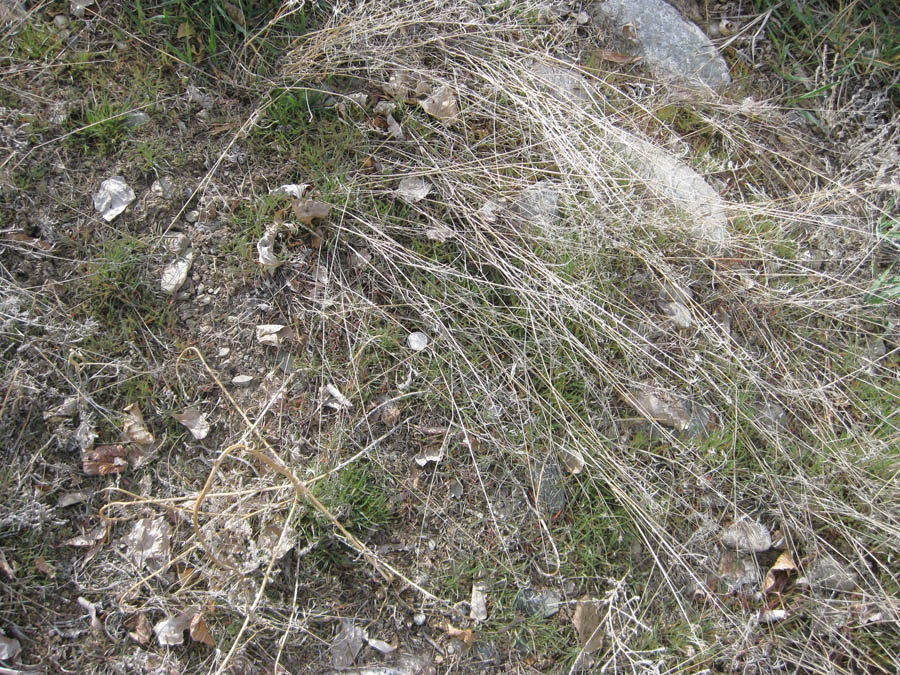
Relatively few of the Idaho noxious weeds are annual plants, but many of the worst of our obnoxious weeds are. The basics: an annual plant is one that usually goes through it's life cycle, from seed germination to seed production, in one year and then dies. Most garden vegetables and bedding plants are annuals which is why we have to replant them each year. For annual weeds, the good news is that to control them all we have to do is prevent seed production and keep new seeds out and they will be gone. Of course it isn't this easy or they wouldn't be the problem plants that they are. The bad news is that all of the annual invasive weeds have adaptions which make them very successful survivors. Generally this means production of huge numbers of seeds that survive well and are widely spread. All of the "tumble weeds" are annuals which spread seed as they tumble across the landscape. In northern Idaho, Kochia is one of these. Cheatgrass produces seeds that survive fire and attach to the fur of animals (and people). In our area, the only annual noxious weed is yellow starthistle, which produces seed that can stay in the soil for up to 12 years. One of the basics for control of all problem weeds is to prevent seed production, but this is especially true for the annual weeds. Don't let them flower! This pic shows young green cheatgrass seedlings growing under last years dead plants (their parents). Note the green carpet look of the young plants. Sorry about the photo quality.
Monday, March 19, 2012
Whoa, the first post!

Since this is the first post, I need to preface everything else by saying that the writings in this blog are based on my experience working in parts of the Great Basin and Northern Rocky Mountains. While much of what I have to say has wider application, you should take this into consideration if you live elsewhere. So, here it is, the first day of spring and our thoughts turn to.....weeds of course. This time of the year plants are springing to life as soon as the weather lets them. It's one of the wonderful things about Spring! Here in northern Idaho wherever the snow has come off, the plants are starting to come awake and that includes invasive weeds. One of the important skills that weed warriors need to work on is identification of weeds in their early growth stages. While all weed books show the weeds in full bloom, only the ones that also show seedlings are useful this time of year. I recommend the widely available "Idaho's Noxious Weeds" (U of I Extension) as a good source for seedling pics. Early identification can mean less work if you are 'lucky' enough to have 'only' annual or biennial weeds and want to do mechanical control. It also gives you more time to figure out what to do if you are unlucky enough to have perennial weeds. If you plan to use herbicides, the small plants are more fragile and this allows you to use lower application rates, which is a good thing. The pic is a young oxeye daisy seedling taken in the spring. Note the characteristic serrated leaves.
Subscribe to:
Posts (Atom)