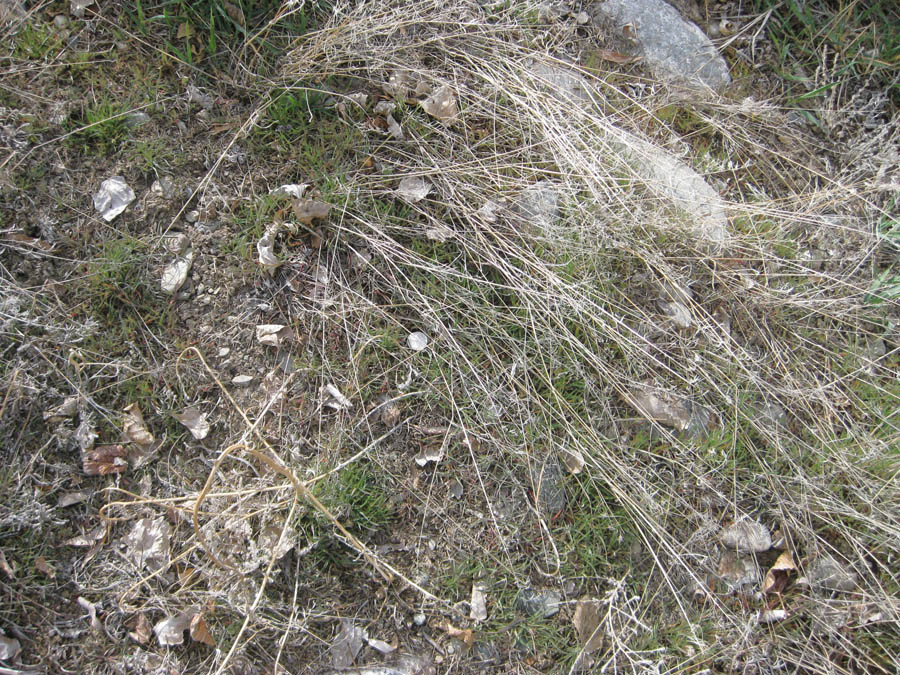
Relatively few of the Idaho noxious weeds are annual plants, but many of the worst of our obnoxious weeds are. The basics: an annual plant is one that usually goes through it's life cycle, from seed germination to seed production, in one year and then dies. Most garden vegetables and bedding plants are annuals which is why we have to replant them each year. For annual weeds, the good news is that to control them all we have to do is prevent seed production and keep new seeds out and they will be gone. Of course it isn't this easy or they wouldn't be the problem plants that they are. The bad news is that all of the annual invasive weeds have adaptions which make them very successful survivors. Generally this means production of huge numbers of seeds that survive well and are widely spread. All of the "tumble weeds" are annuals which spread seed as they tumble across the landscape. In northern Idaho, Kochia is one of these. Cheatgrass produces seeds that survive fire and attach to the fur of animals (and people). In our area, the only annual noxious weed is yellow starthistle, which produces seed that can stay in the soil for up to 12 years. One of the basics for control of all problem weeds is to prevent seed production, but this is especially true for the annual weeds. Don't let them flower! This pic shows young green cheatgrass seedlings growing under last years dead plants (their parents). Note the green carpet look of the young plants. Sorry about the photo quality.
Monday, April 2, 2012
Annual Weeds
Relatively few of the Idaho noxious weeds are annual plants, but many of the worst of our obnoxious weeds are. The basics: an annual plant is one that usually goes through it's life cycle, from seed germination to seed production, in one year and then dies. Most garden vegetables and bedding plants are annuals which is why we have to replant them each year. For annual weeds, the good news is that to control them all we have to do is prevent seed production and keep new seeds out and they will be gone. Of course it isn't this easy or they wouldn't be the problem plants that they are. The bad news is that all of the annual invasive weeds have adaptions which make them very successful survivors. Generally this means production of huge numbers of seeds that survive well and are widely spread. All of the "tumble weeds" are annuals which spread seed as they tumble across the landscape. In northern Idaho, Kochia is one of these. Cheatgrass produces seeds that survive fire and attach to the fur of animals (and people). In our area, the only annual noxious weed is yellow starthistle, which produces seed that can stay in the soil for up to 12 years. One of the basics for control of all problem weeds is to prevent seed production, but this is especially true for the annual weeds. Don't let them flower! This pic shows young green cheatgrass seedlings growing under last years dead plants (their parents). Note the green carpet look of the young plants. Sorry about the photo quality.
Monday, March 19, 2012
Whoa, the first post!

Since this is the first post, I need to preface everything else by saying that the writings in this blog are based on my experience working in parts of the Great Basin and Northern Rocky Mountains. While much of what I have to say has wider application, you should take this into consideration if you live elsewhere. So, here it is, the first day of spring and our thoughts turn to.....weeds of course. This time of the year plants are springing to life as soon as the weather lets them. It's one of the wonderful things about Spring! Here in northern Idaho wherever the snow has come off, the plants are starting to come awake and that includes invasive weeds. One of the important skills that weed warriors need to work on is identification of weeds in their early growth stages. While all weed books show the weeds in full bloom, only the ones that also show seedlings are useful this time of year. I recommend the widely available "Idaho's Noxious Weeds" (U of I Extension) as a good source for seedling pics. Early identification can mean less work if you are 'lucky' enough to have 'only' annual or biennial weeds and want to do mechanical control. It also gives you more time to figure out what to do if you are unlucky enough to have perennial weeds. If you plan to use herbicides, the small plants are more fragile and this allows you to use lower application rates, which is a good thing. The pic is a young oxeye daisy seedling taken in the spring. Note the characteristic serrated leaves.
Subscribe to:
Posts (Atom)